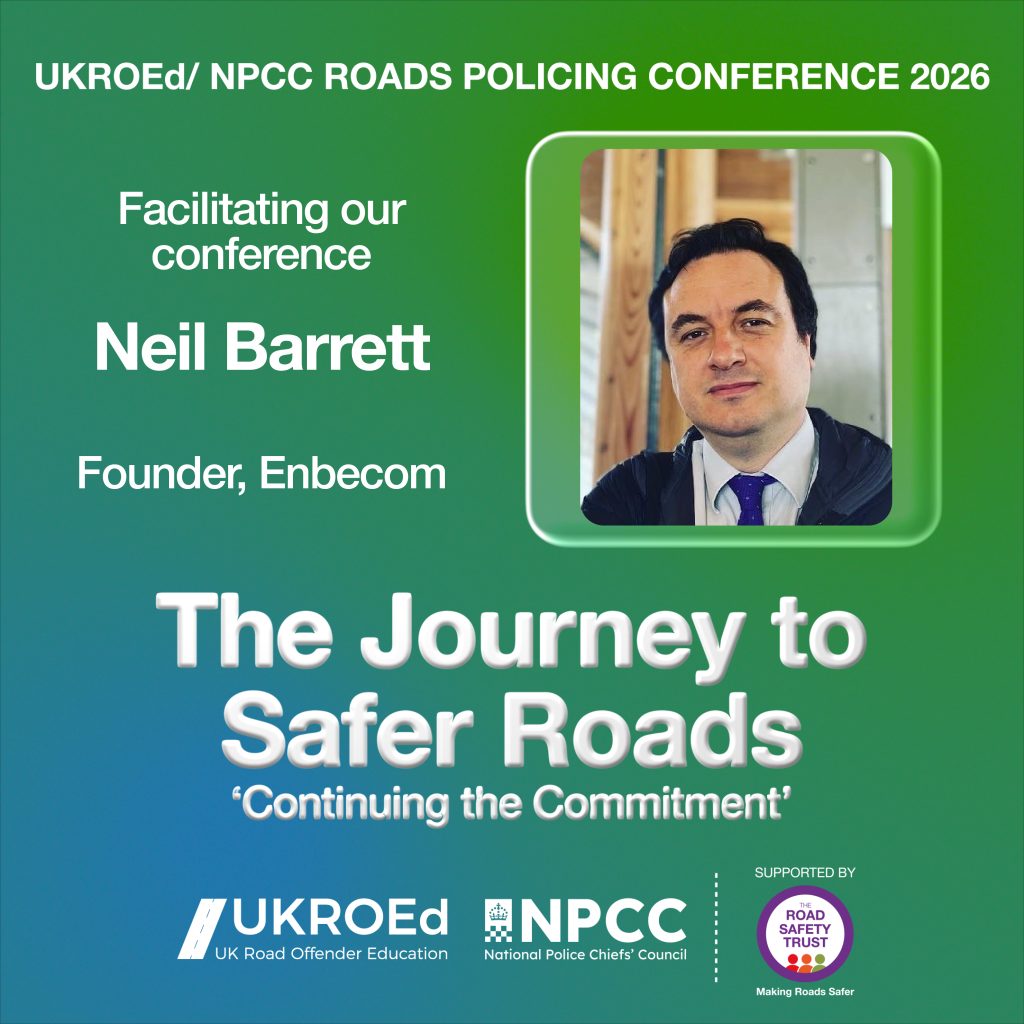
Neil Barrett, Conference Facilitator
Neil has run Enbecom, an IT consulting firm specialising in web technology, for more than 20 years. He has also worked extensively with law enforcement in the UK and abroad, including spending more than a decade with the European Roads Policing Network. Neil spent summer 2023 on an epic 5,500-mile road trip across nine countries to the top of mainland Europe, producing blogs and video to explore how “mainstream” and cost-effective electric vehicles and infrastructure have become across Scandinavia and beyond. He also writes on vehicle technology and the future of mobility for Good Motoring magazine. He is a highly experienced presenter, chair and moderator, with a true passion for reducing the number of people killed and injured on our roads.
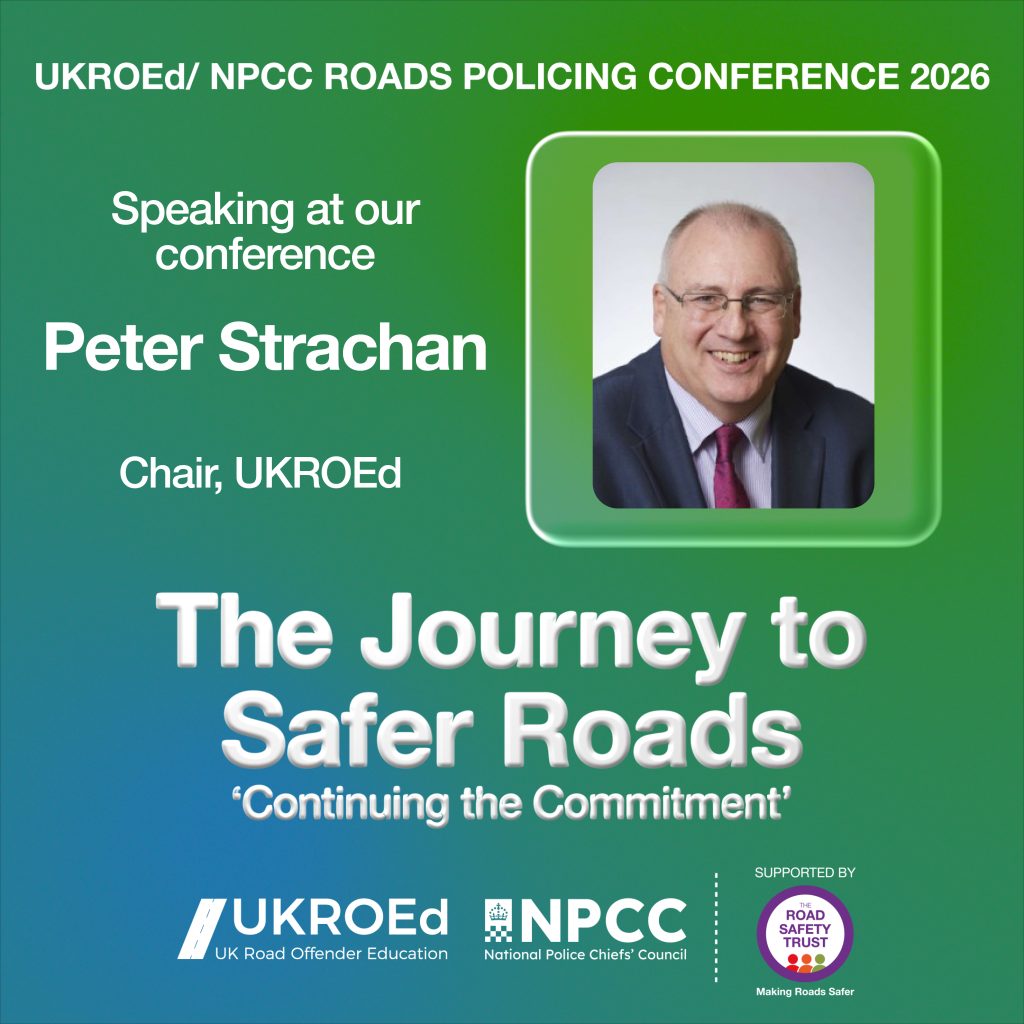
Peter Strachan, UKROEd Chair
Peter has over 40 years’ experience in transport in the UK and Australia, including running a number of the UK train operating companies, CEO of the Translink Transit Authority in Queensland, and as Director General for Major Projects and London in the Department for Transport during the 2012 London Olympic Games. He currently serves on the Board of Merseyrail for Serco plc, the Board of Transport for London, is a non-executive Board member for Transport for Wales Rail, and Chair of the National Transport Authority for Ireland. Peter is a BA honours graduate in geography from the University of Durham.
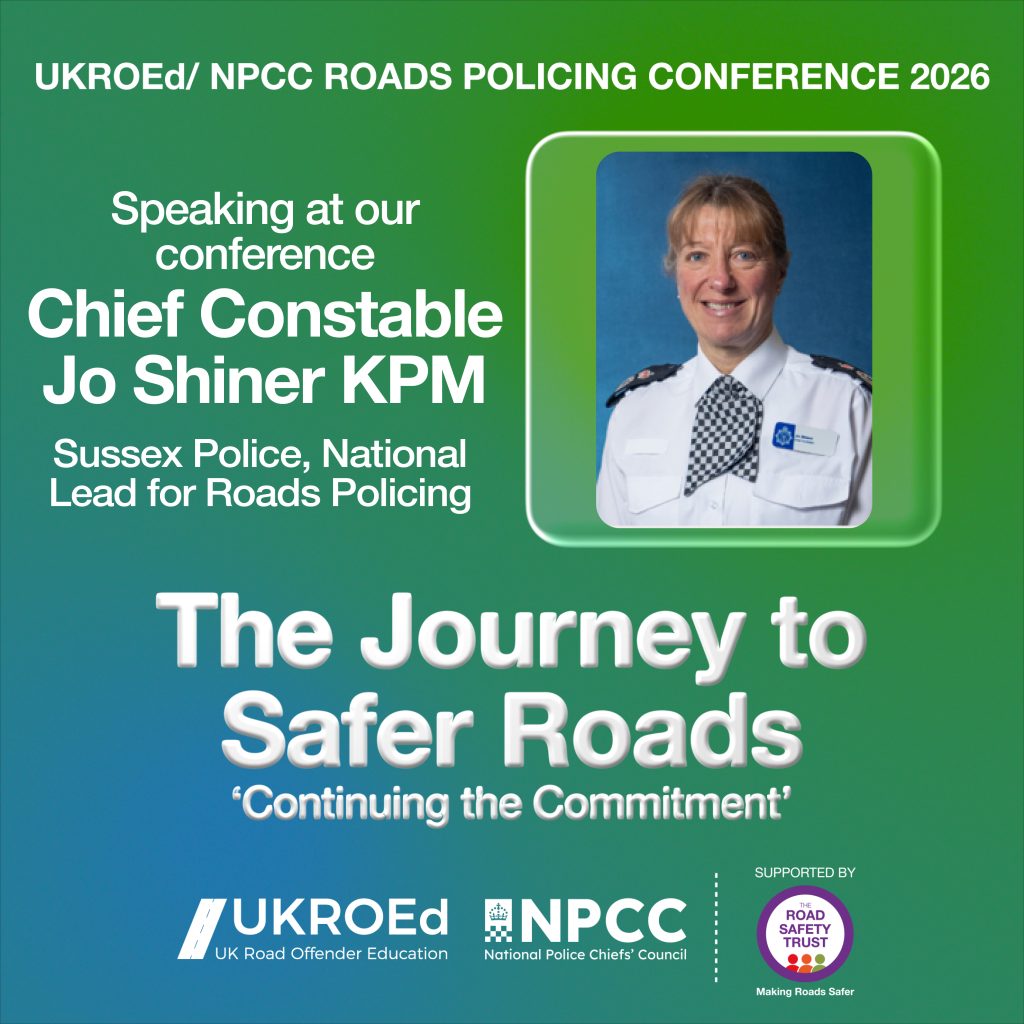
Chief Constable Jo Shiner KPM, Sussex Police and NPCC Lead for Roads Policing
Jo Shiner is the first female Chief Constable in the history of Sussex Police. She started her policing career in Norfolk in 1993, serving up to the rank of Chief Superintendent, and later transferred on promotion to Kent as Assistant Chief Constable in 2014.
Jo joined Sussex Police in late 2018 as Deputy Chief Constable. Awarded the King’s Police Medal (KPM) in 2025, the medal recognises her distinguished services to policing. Throughout her career she has been committed to taking a preventative and proactive approach to policing – always working closely with partners. Her strong belief is that there are very few circumstances where policing alone is the answer.
Jo became National Police Chiefs’ Council lead for Roads Policing in June 2021. She has always held a firm view that effective policing of our roads will reduce crime and save lives. Jo’s lived experience of losing her father in a road traffic collision when she was just a teenager gives her a strong and passionate voice when advocating for road safety.
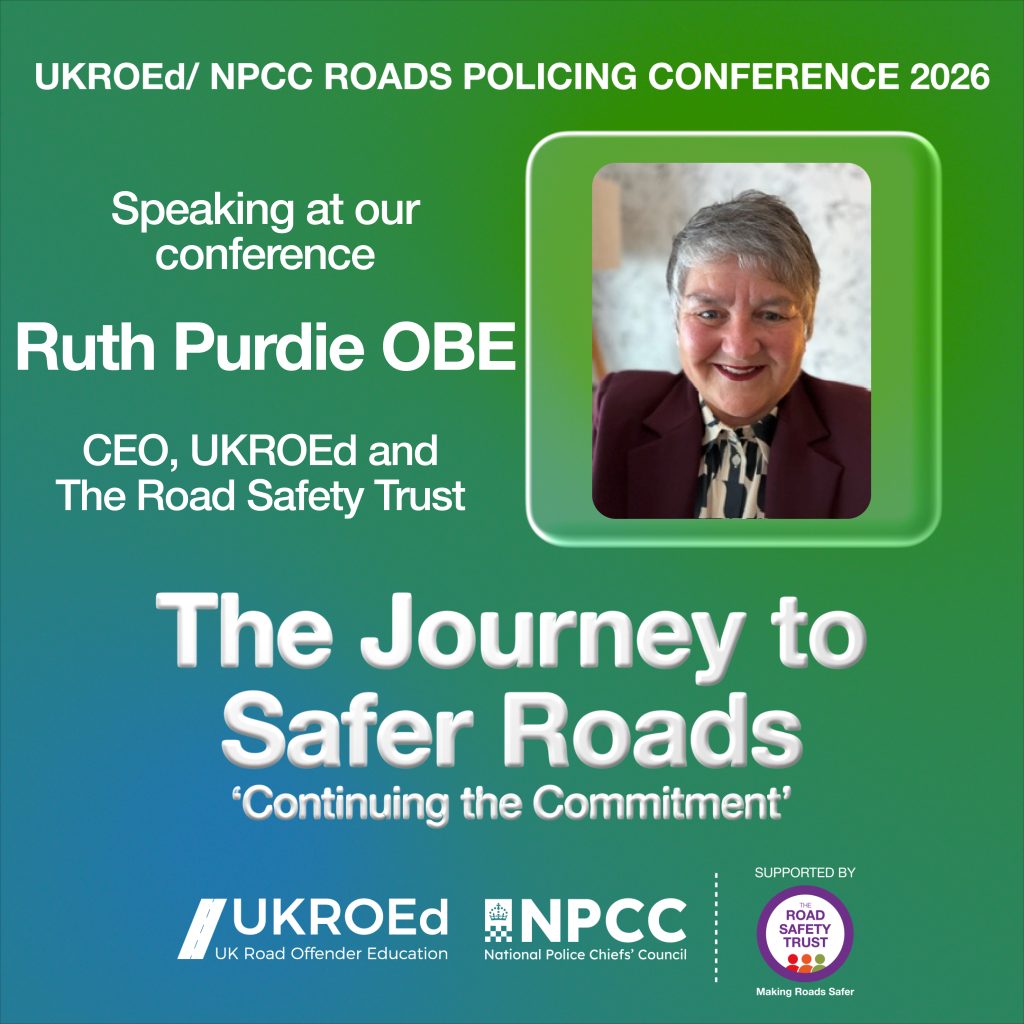
Ruth Purdie OBE, Chief Executive of UKROEd and The Road Safety Trust
Ruth Purdie OBE is Chief Executive of UKROEd and The Road Safety Trust, leading the strategic direction of both organisations to improve road safety across the UK. A passionate advocate for safer roads, she champions behavioural change and collaboration as key drivers of a safer road system.
Ruth previously served as CEO of TISPOL (the European Roads Policing Network), working with governments, police leaders, and the European Commission to advance road safety and security across Europe. She received a Global Light of Hope award in 2018 for her contribution.
Following a 30+ year policing career, where she rose to Assistant Chief Constable, Ruth brings extensive experience in leadership, governance, and crisis management. Ruth holds a First-Class Honours degree in Management from the University of Manchester, and in the 2021 New Year Honours, she was awarded the OBE for services to policing and road safety. In 2024, Ruth was recognised with a Project EDWARD Award, presented by Lilian Greenwood MP, the Minister for Future Roads, celebrating her significant contribution to road safety.
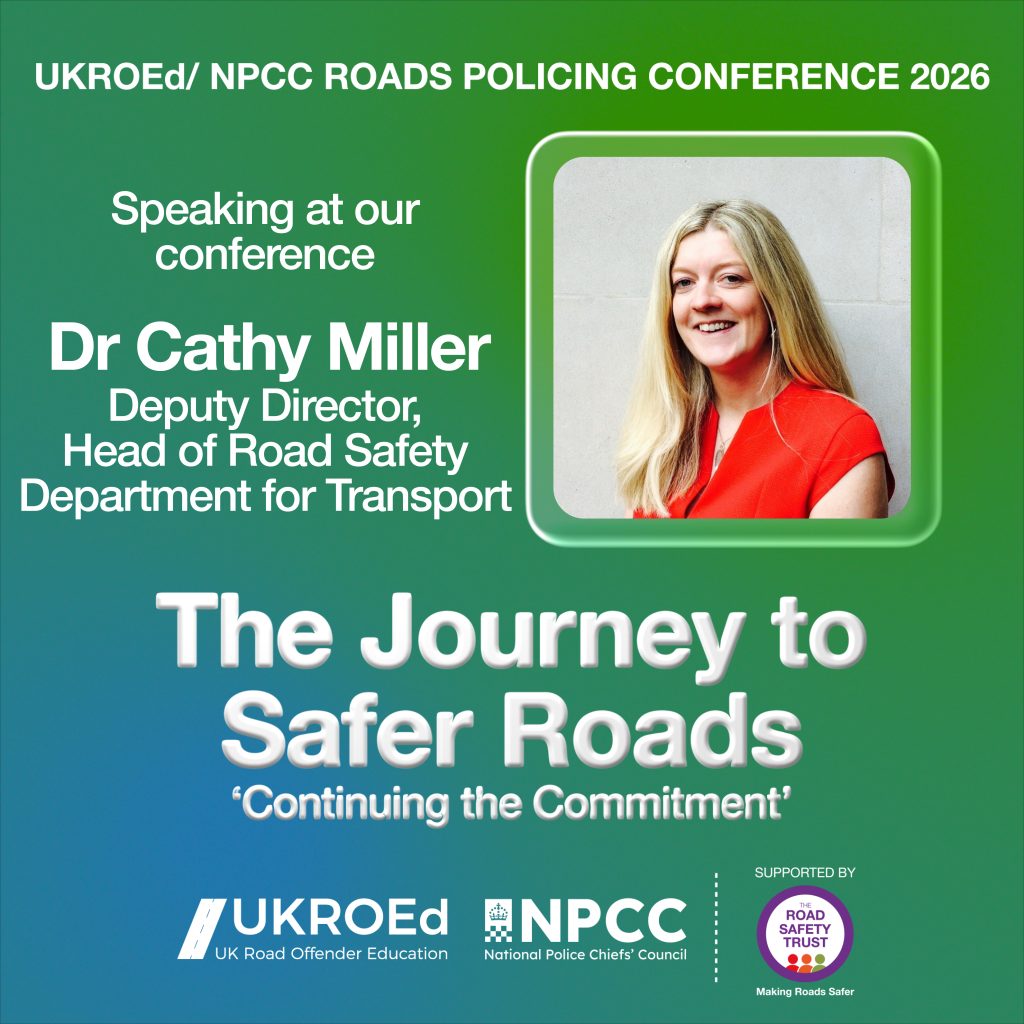
Cathy Miller, Department for Transport
Cathy has twenty years’ experience in the UK Civil Service, across transport, environment and local government policy. She has been Head of Road Safety since November 2024, with lead responsibility for the 2026 Road Safety Strategy. In addition she is also responsible for motor insurance policy and is the department’s senior sponsor for the DVLA.
She has previously worked on planning policy for major roads, cities and devolution, and leading the Department of Transport’s relationships with city transport authorities, including Transport for London. She has also worked at the Department for Environment, Food and Rural Affairs and HM Treasury.
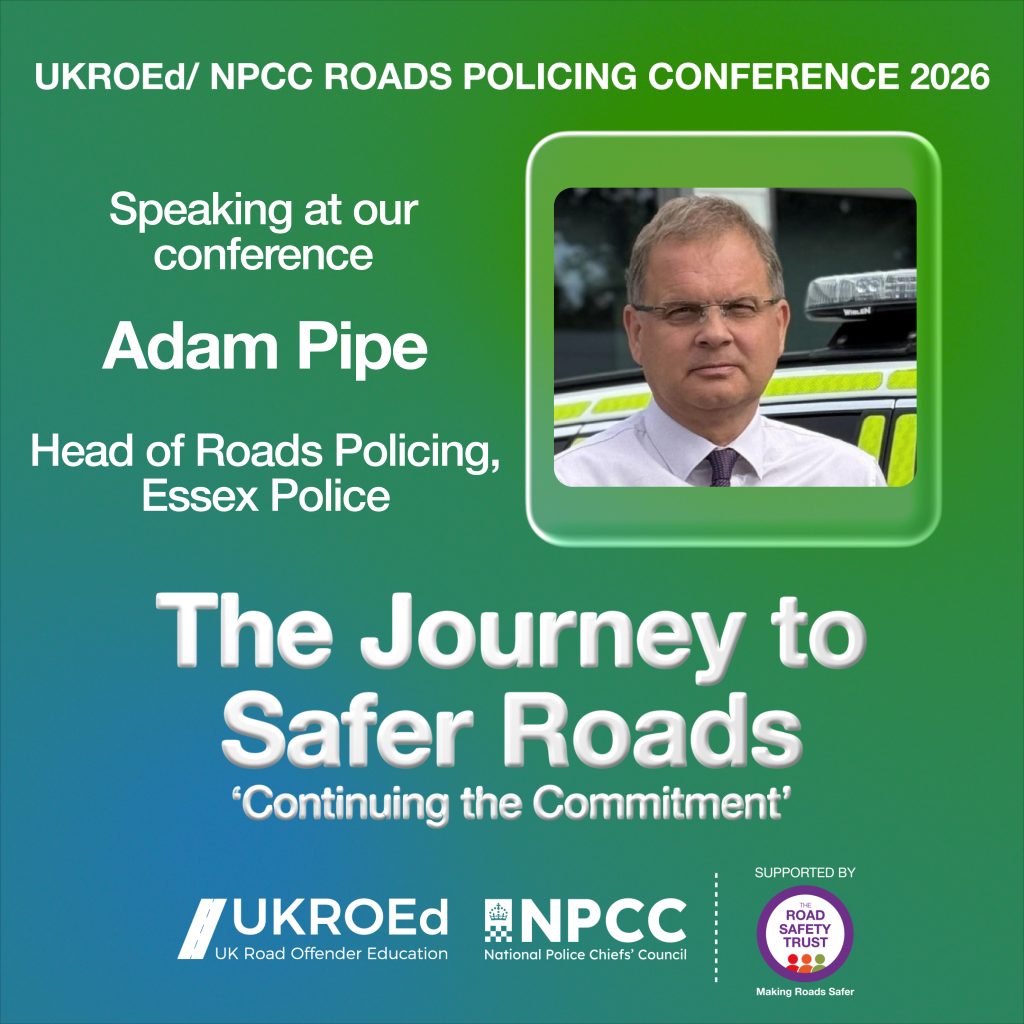
Adam Pipe, Essex Police
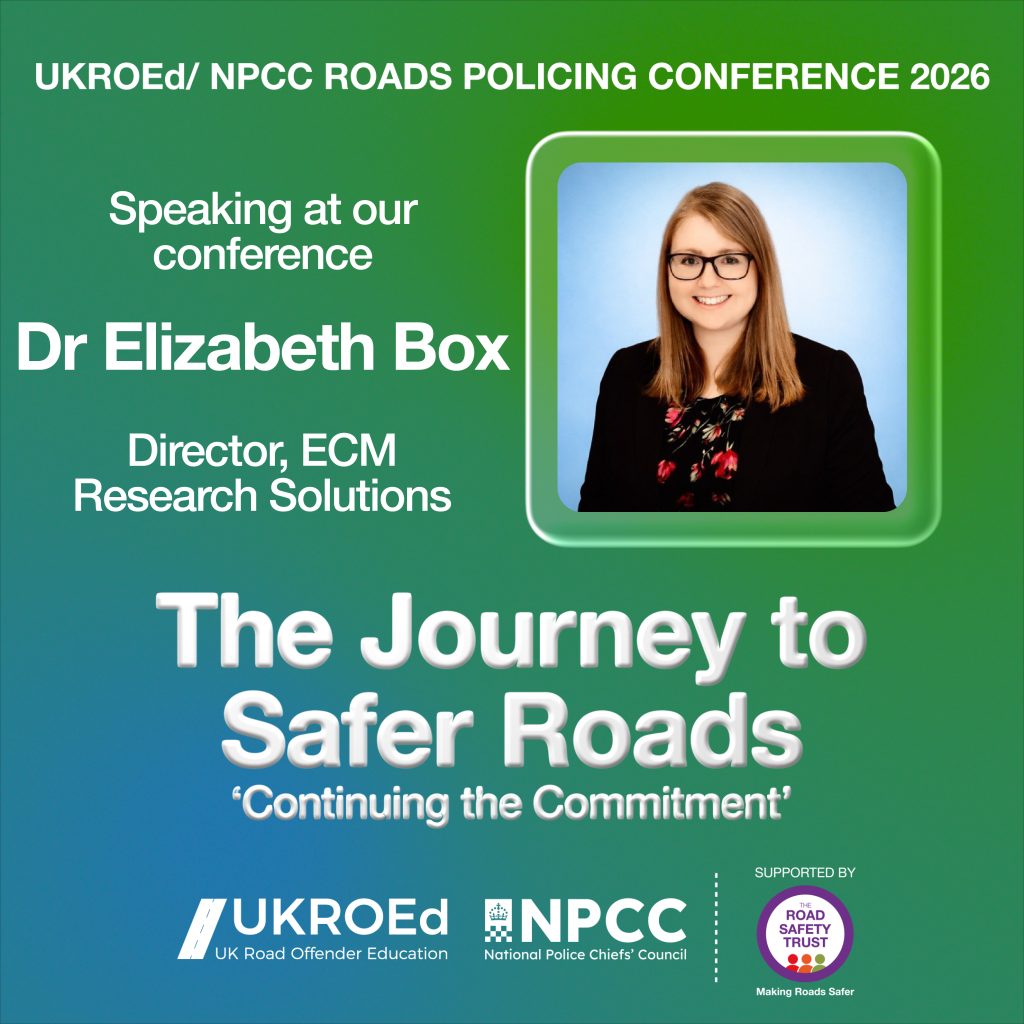
Dr Elizabeth Box, ECM Research Solutions
Dr Elizabeth Box is Director of ECM Research Solutions Ltd and a Behavioural Science Consultant specialising in the design, delivery and evaluation of evidence-based safety interventions. With more than 20 years’ experience in transport research and road safety, she works with government, police, charities and industry partners to translate behavioural science into practical programmes that improve safety outcomes.
Prior to establishing ECM Research Solutions, Elizabeth spent two decades at the RAC Foundation, where she played a leading role in commissioning and delivering research that helped shape national road safety policy and practice. Her work has focused on young driver safety, motorcyclist safety, road user education, behaviour change and intervention design.
Elizabeth completed her doctorate in Transport Psychology at Cranfield University, where her research focused on developing and evaluating behaviour change interventions for young road users. In 2025, she received Cranfield University’s Excellence in Achievement Award for Recent Safety Graduates in recognition of her contribution to advancing behavioural science in safety and translating research into real-world impact.
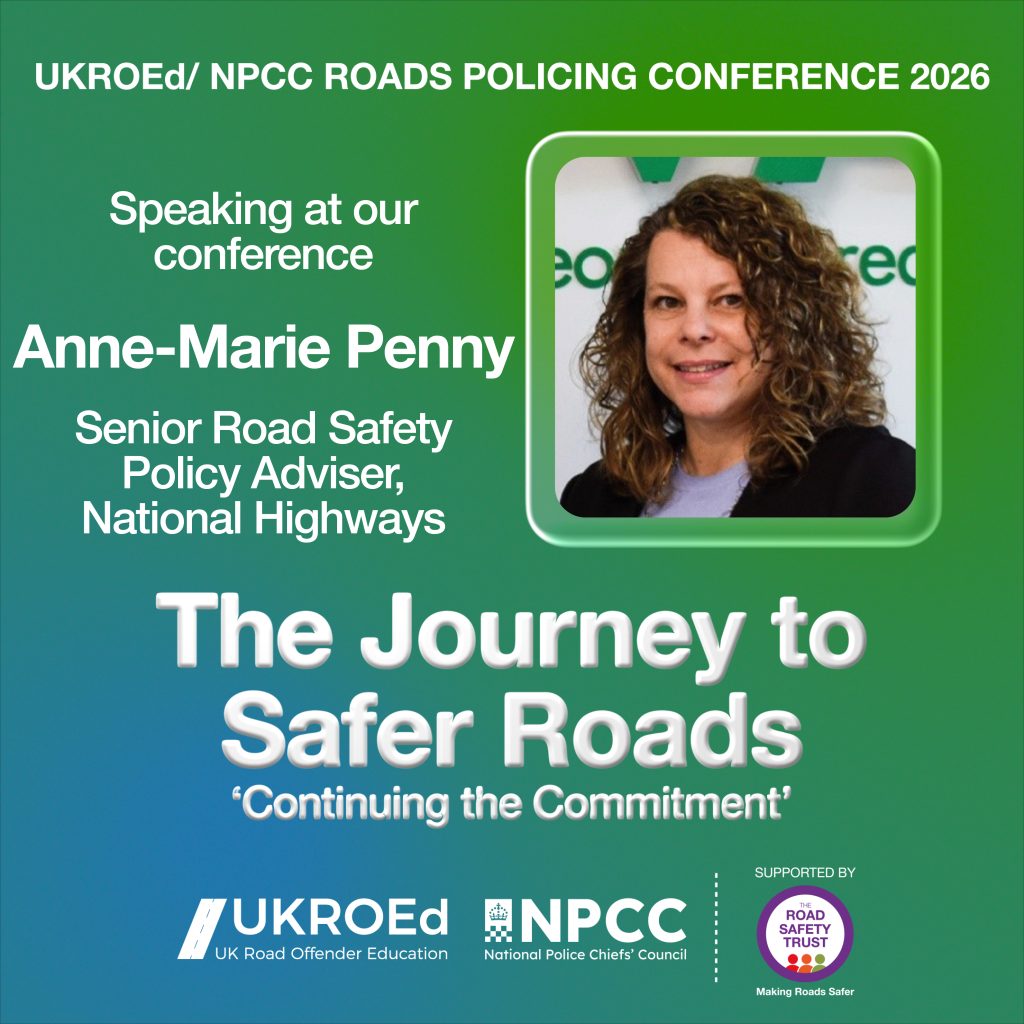
Anne-Marie Penny, National Highways
Anne-Marie Penny is a Senior Road Safety Policy Adviser in National Highways. She has worked in road safety for over 23 years, in local government as a road safety officer, engagement manager, and Safety Camera Partnership Manager, during which time she hosted the FIA Foundation International Road Safety Scholarship bringing together the future road safety leaders from around the world. She moved to National Highways in 2017 to lead the Driving for Better Business Programme working with employers to improve the management of driving for work. The programme reaches over 435,000 businesses and 6million drivers.
She has been a trustee for the Eastern Alliance for Safe and Sustainable Transport working on roads policing and road safety in Eastern Europe and the South Caucasus and is currently a trustee of the Association for Road Risk Management. She has been the recipient of three Prince Michael Internation Road Safety Awards and the Brake Kevin Storey Award for Outstanding Commitment to Road Safety.
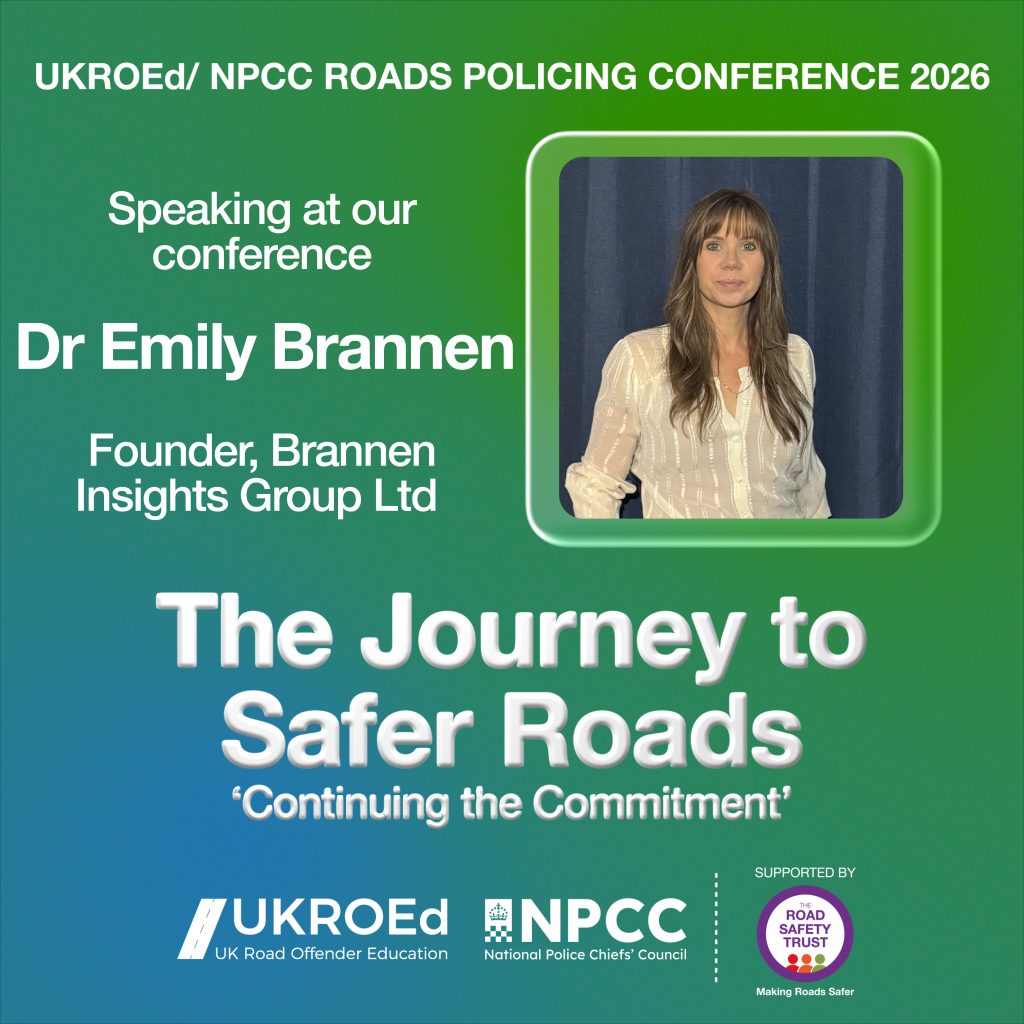
Dr Emily Brannen, Brannen Insights Group Ltd
Emily is an independent researcher and consultant specialising in road safety, roads policing, driver behaviour and criminal justice. Following submission of her thesis, she founded Brannen Insights Group Ltd and is an Associate at TJA Associates, where she works across research, evaluation and strategic consultancy projects for policing, government and third-sector clients. Emily is also a proud member of the Roads Policing Academic Network.
Her PhD, completed at Keele University and funded by UKROEd, examined the National Driver Offender Retraining Scheme (NDORS) as a criminal justice disposal. It was a large-scale exploration of the courses from a criminological perspective, drawing on survey data, interviews conducted across the scheme, and analysis of the public-facing materials used to describe the courses. The study developed new theoretical concepts for understanding how education functions as a diversionary disposal and was awarded without corrections in June 2026.
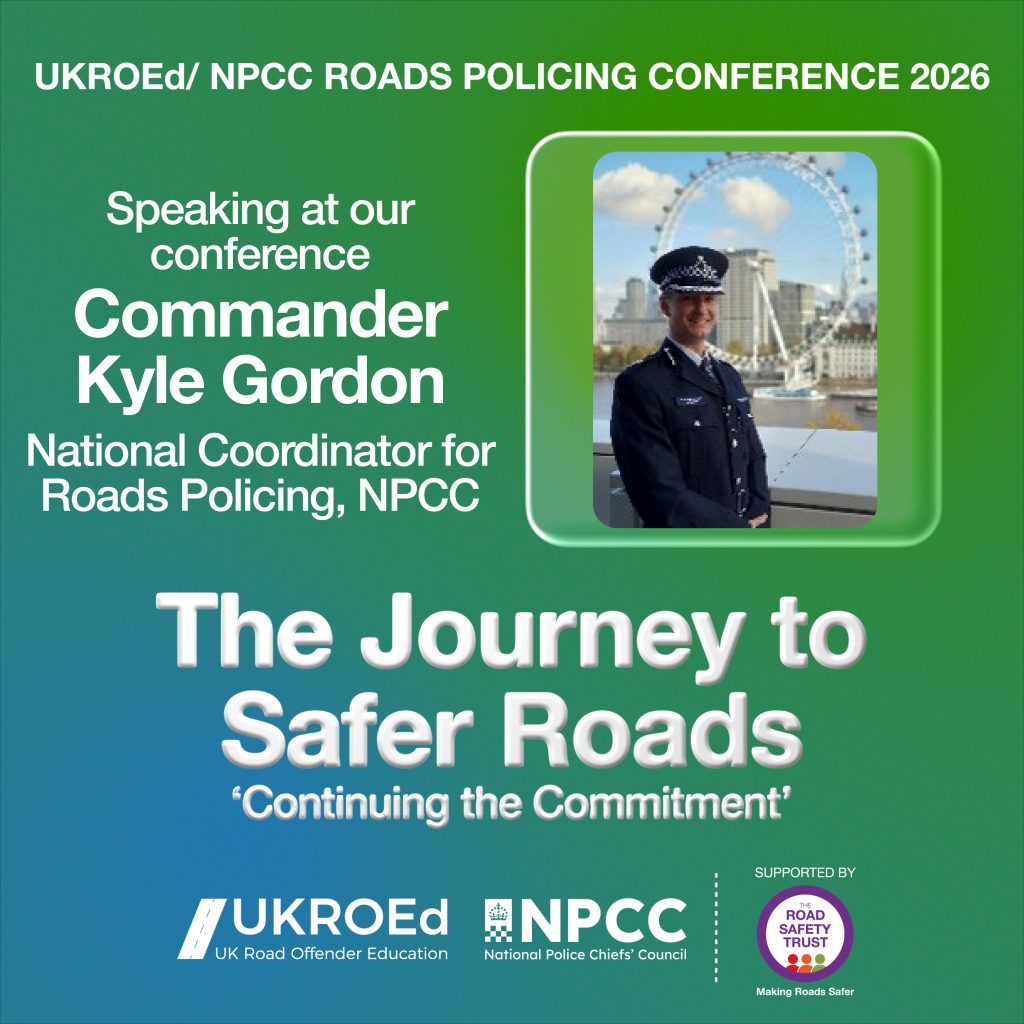
Commander Kyle Gordon, National Coordinator for Roads Policing, NPCC
Kyle has over 30 years of operational and command experience within UK policing, specialising in delivery in complex and high-risk environments across Public Order, Firearms, and Roads Policing.
Having spent two decades policing in Northern Ireland, Kyle subsequently joined the Metropolitan Police Service as the strategic lead for Specialist Uniformed Operations, overseeing Specialist Firearms, Met Taskforce, and Roads Policing. As head of the Roads and Transport Policing Command, he successfully demonstrated how effective roads policing not only reduces road casualties but serves as a vital cross cutting capability for disrupting criminality.
In 2020, Kyle took on national responsibility as the NPCC Lead for Roads Policing Operations, and in 2024, he co-designed Operation Topaz, a landmark joint initiative between the NPCC and the Department for Transport (DfT), assuming full leadership of the programme in April 2025. This work culminated in the development and launch of the UK’s first National Roads Policing Coordination Centre (NRPCC) in June 2026, with Kyle appointed as the inaugural National Coordinator.
Working in collaboration with the Home Office, DfT, and the NPCC, Kyle currently directs the national policing response to the Road Safety Strategy 2026.
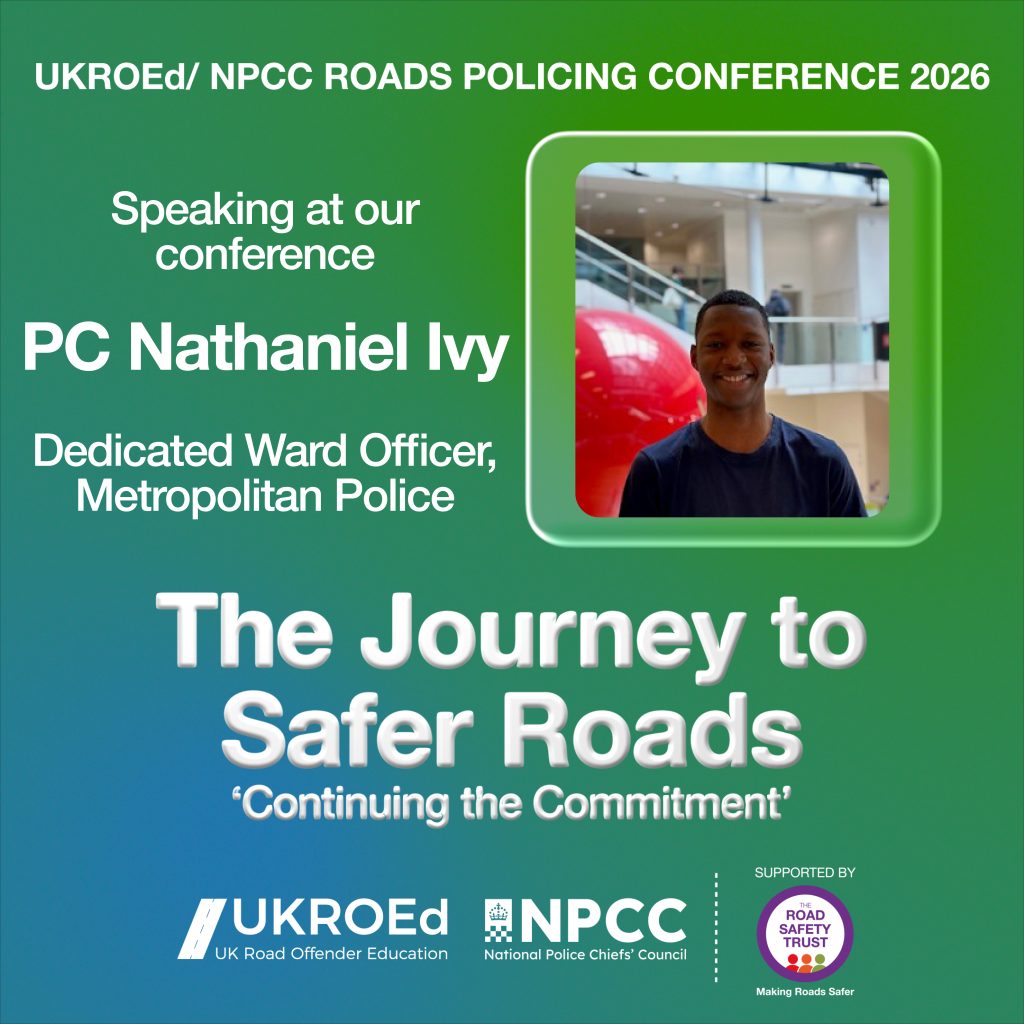
PC Nathanial Ivy, Metropolitan Police
Nathaniel joined the Metropolitan Police Service in 2023 as a Dedicated Ward Officer for Croydon Neighbourhoods. In 2024, he went on to develop Operation Veyvah, a roads policing and pedestrian safety initiative across Croydon Town Centre. His leadership in this work led to him winning the Frontline Hero of the Year – UKROEd/NPCC Roads Policing 2025 Award.
Nathaniel has since expanded Op Veyvah across the entire South Area Basic Command Unit, covering 110 square miles and serving over 900,000 residents. The operation emphasises the importance of joint working between specialist commands, local neighbourhood policing teams, and external partners to collaboratively tackle two-wheel-enabled crime, supporting the Met’s crackdown on illegally modified e-bikes and e-scooters.
The initiative has been well received by the London community, with its learning shared with other UK police forces and internationally, including with the NYPD.
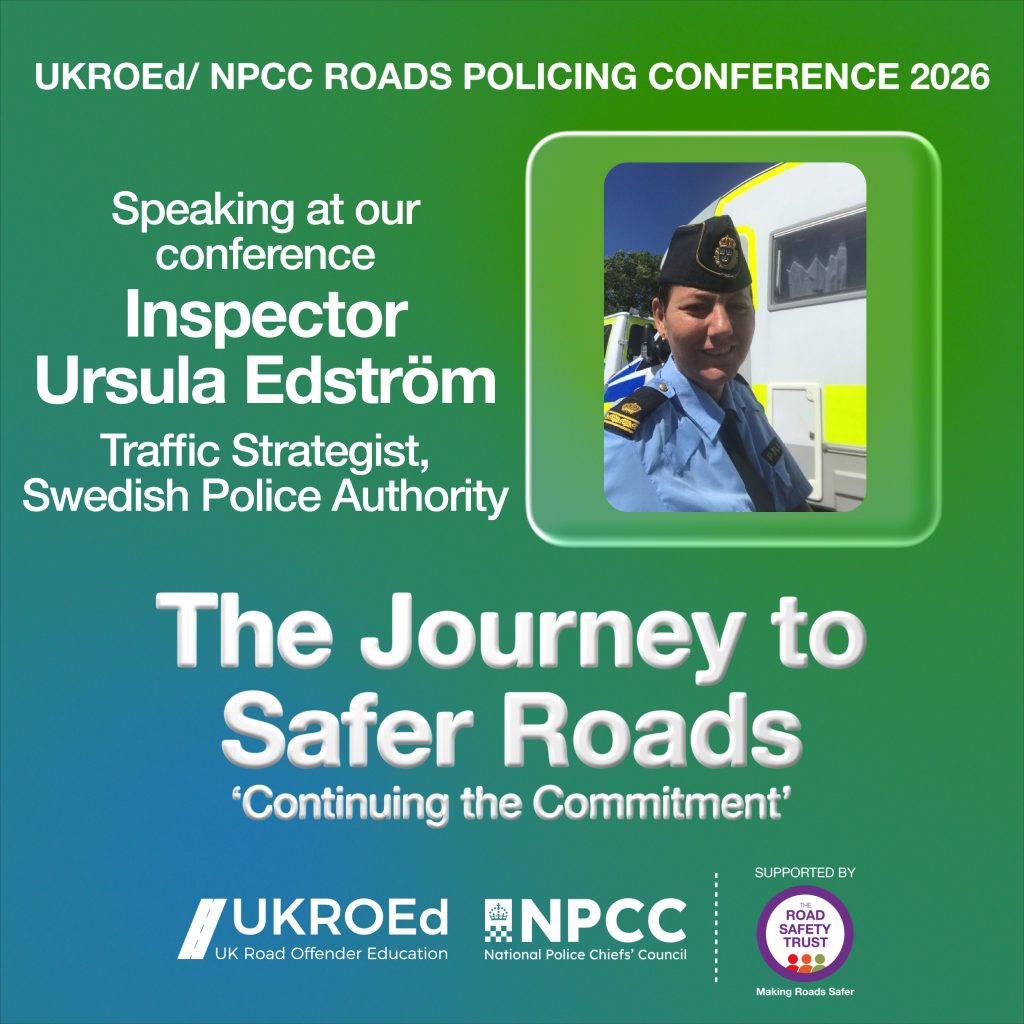
Insp Ursula Edström, Swedish Police Authority
Ursula Edström is a highly experienced police officer with more than 35 years in law enforcement, specialising in traffic safety and enforcement. Her work in recent years has mainly focused on speed control using radar systems and the detection of drug-impaired drivers through advanced eye-scanning methods.
She has extensive knowledge of Sweden’s Vision Zero approach to road safety and applies structured enforcement strategies, including the 20-Minute Method – a crime prevention method used in traffic enforcement involving systematic, time-based roadside checks to increase compliance and reduce risk.
Ursula brings extensive practical experience in roadside enforcement and a deep understanding of impaired driving detection.
Dr Helen Wells, National Roads Policing Coordination Centre
Helen has been a roads policing researcher for nearly 25 years. She is Director of the Roads Policing Academic Network, and has recently joined the NRPCC as Innovation and Insight Lead.
Helen is a Senior Lecturer in Criminology at Keele University and director of the international Roads Policing Academic Network. Her research focuses on policing and technology generally and roads policing specifically, including road-user attitudes and perspectives, and policing practice.
She has worked on projects for the UK Department for Transport, Home Office, National Police Chiefs’ Council, National Highways and many local police forces, exploring topics including speeding, distraction, drink and drug driving, ANPR, the use of dash cams, and uninsured driving. She is currently seconded to the NRPCC as Innovation and Insight Lead.
Dave Harford, Transport for West Midlands
Dave joined Transport for West Midlands as their Road Safety Action Plan Co-Ordinator in September 2025. Prior to his arrival, Dave spent 20 years on the roads of the UK in various public and private sector operational roles, most notably as a National Highways Traffic Officer.
Dave’s experience includes representing First Responders at the Emergency Services Show and he was an ambassador for road worker abuse and road safety at a stakeholder discussion meeting in the Houses of Parliament. Dave is also a co-author on the manuscript ‘Scene and System Principles for Safe Bystander Response Following Road Traffic Collisions’ submitted to the Scandinavian Journal of Trauma.
Dave is proactive on social media and has been for a long time with his own road safety blog and supported West Mercia Police in educating children about the dangers faced on today’s roads. His road safety passion spans many years of raising awareness, educating, and practicing it first-hand.
Dr Nick Reed, Reed Mobility
Nick has worked at the cutting edge of transportation research for more than twenty years, leading connected and automated vehicle projects in the UK to the value of more than £50m. Nick was Academy Director at TRL (the UK’s Transport Research Laboratory) before becoming Head of Mobility R&D at Bosch, the world’s largest automotive supplier.
He has since founded Reed Mobility – an independent expert consultancy on future mobility topics working across the public, private and academic sectors to deliver transport systems that are safe, clean, efficient, ethical and equitable and including projects for the European Commission, DfT and TfL His work covers the safety and ethics implications of new transport technologies, particularly self-driving vehicles – for which he has regularly provided evidence to the Transport Select Committee.
Nick is a trustee of The Road Safety Trust and is a non-executive director of FISITA, the international association for mobility engineers. As a chartered scientist and psychologist, Nick is committed to robust and rigorous scientific practices and he is a Fellow of the Chartered Institution of Highways and Transportation and a Member of the Association for Road Risk Management.
Prof Fiona Fylan, Leeds Beckett University
Professor Fiona Fylan is a health psychologist and Professor of Sustainable Behaviour at the Leeds Sustainability Institute, Leeds Beckett University. The Institute is an interdisciplinary research centre that undertakes research to support the transition to net zero while addressing major societal challenges in the built environment, including air pollution, fuel poverty, poor housing and road safety. Fiona applies behavioural science to understand why people behave as they do and to develop and evaluate interventions that promote safer, healthier and more sustainable behaviours.
She has extensive experience of translating behavioural science into policy and practice, working with government departments, local authorities and industry partners. She led the behavioural design and development of the National Speed Awareness Course, and her work informed the development of the new Drug Drive course. Her research focuses on designing, implementing and evaluating evidence-based interventions that improve road user safety and support sustainable behaviour change.
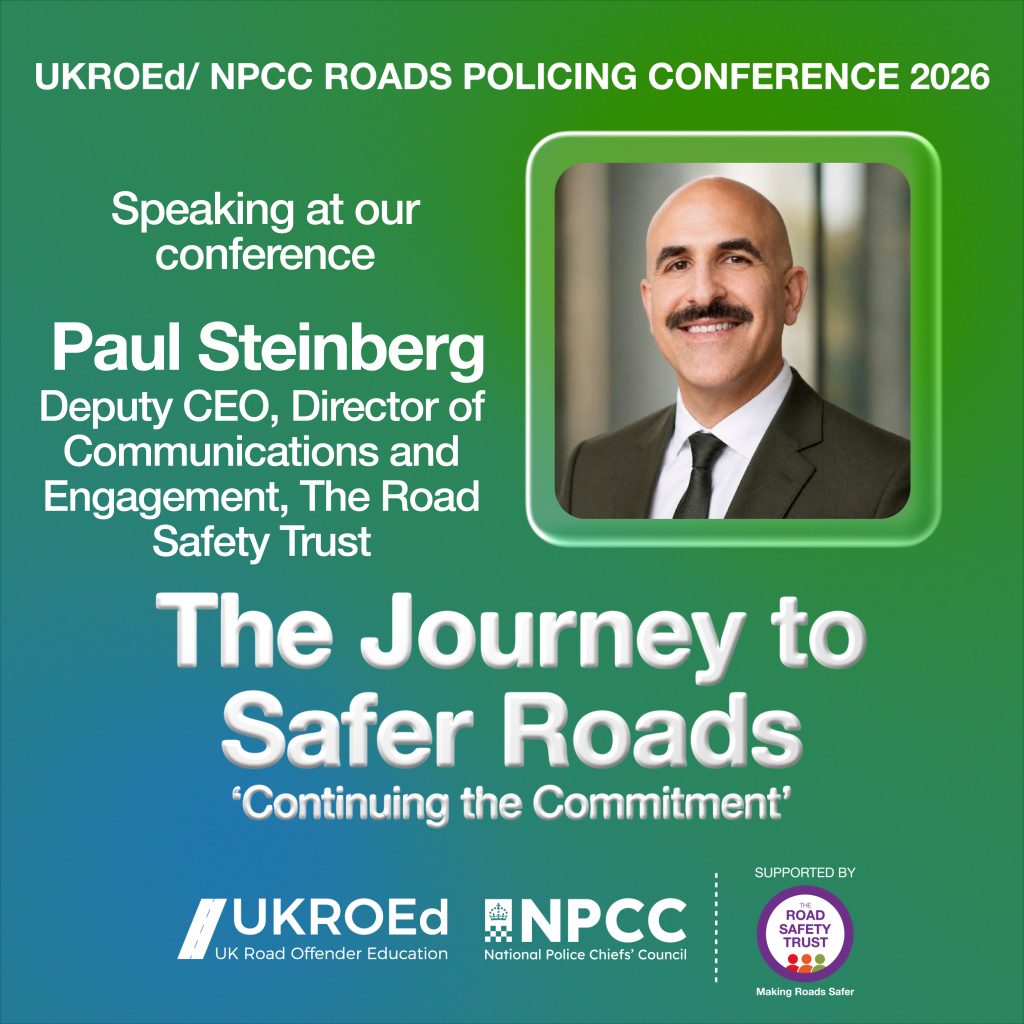
Paul Steinberg, The Road Safety Trust
Paul joined The Road Safety Trust as Director of Communications and Engagement in July 2024 and has been the charity’s Deputy CEO since December 2025. He began his career in broadcast journalism at the BBC, working across network news and Radio 4 arts programming, before moving into health promotion, public health communications and social marketing. In 2014, he established the award-winning Do It London HIV prevention programme, which was named LGC National Campaign of the Year.
Since joining the Trust, Paul has led the development and implementation of its new Communications and Engagement Strategy, strengthened its media and stakeholder engagement, and helped increase the visibility and impact of the research and initiatives it funds. Paul is a passionate advocate for adopting a broad public health approach to improving road safety.
